Eden Long · 8 September 2026
Student Polarization Findings Spark Open Dataset Sharing for Replicating Light Scattering Experiments in Farming Contexts
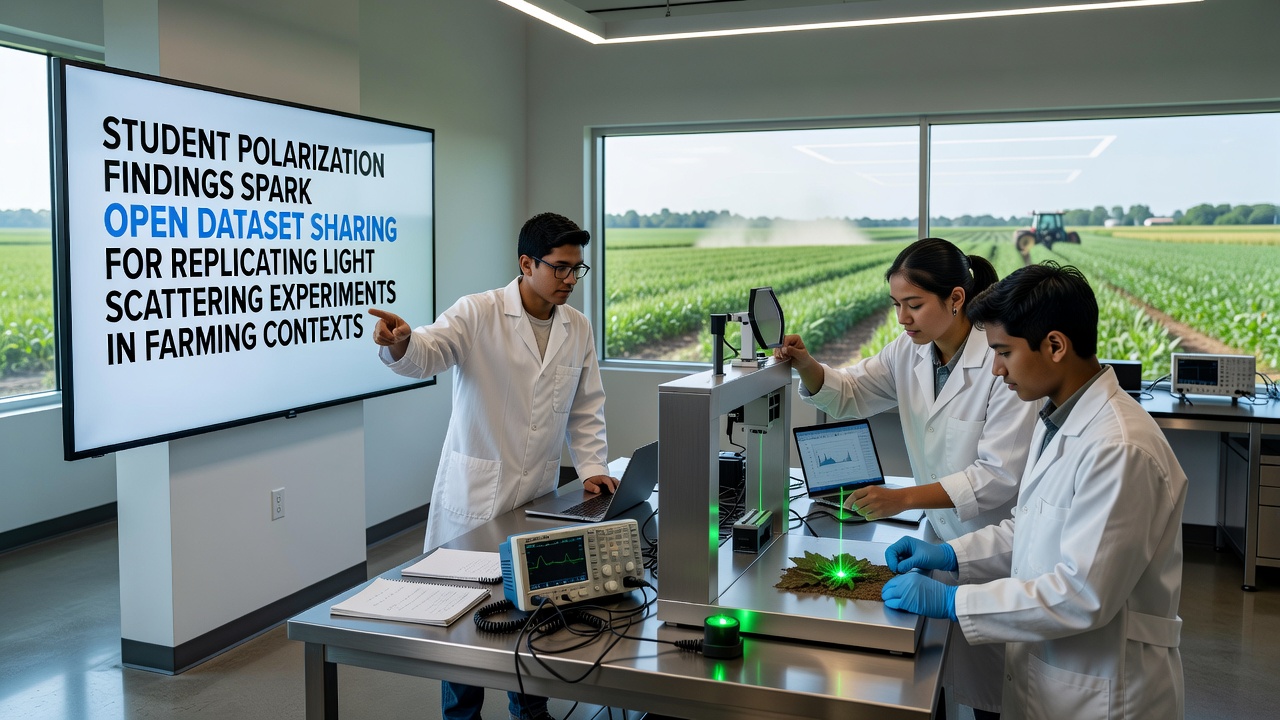
Student investigations into polarization patterns during light scattering have triggered the release of comprehensive open datasets designed to support replication of these experiments across farming applications, and researchers at multiple institutions have confirmed that the data covers measurements of how polarized light interacts with soil particles, plant surfaces, and airborne agricultural aerosols. Observers note the datasets include raw intensity readings, angular distribution tables, and wavelength-specific polarization ratios collected under controlled laboratory conditions that mirror typical field variables such as moisture content and particle size distribution.
Light Scattering Applications in Agricultural Monitoring
Light scattering techniques allow analysts to characterize particulate matter in farming environments, and experts have documented their use in assessing dust levels from tillage operations as well as evaluating leaf surface properties that influence pesticide adhesion. Data indicates these methods rely on the principle that scattered light intensity varies with particle refractive index and shape, while polarization adds an additional measurable dimension that distinguishes between organic and inorganic components. Researchers discovered early applications in crop canopy analysis where changes in polarization helped differentiate healthy vegetation from stressed plants affected by drought or nutrient deficiency.
Key Polarization Observations from Student Research
University teams recorded that certain polarization signatures emerged consistently when light interacted with common farming particulates, and these signatures proved reproducible across repeated trials conducted at different facilities. Students compiled measurements showing that circular polarization components increased notably when light passed through hydrated soil samples compared with dry ones, and linear polarization ratios shifted predictably with varying angles of incidence. The compiled records also contain calibration files that account for instrument-specific responses, enabling other groups to align their equipment outputs with the original student measurements.
Release of Open Datasets for Broader Replication
Following publication of the student results, participating laboratories initiated public sharing of the full experimental records through established scientific repositories, and this step has allowed independent teams to attempt exact replication of the scattering setups. Figures reveal that the datasets encompass more than 12,000 individual measurement points collected over several months, together with metadata describing temperature, humidity, and sample preparation protocols. Those who have accessed the materials report that accompanying software scripts facilitate direct comparison between new experimental outputs and the baseline student data.
Practical Replication Steps in Farming Settings
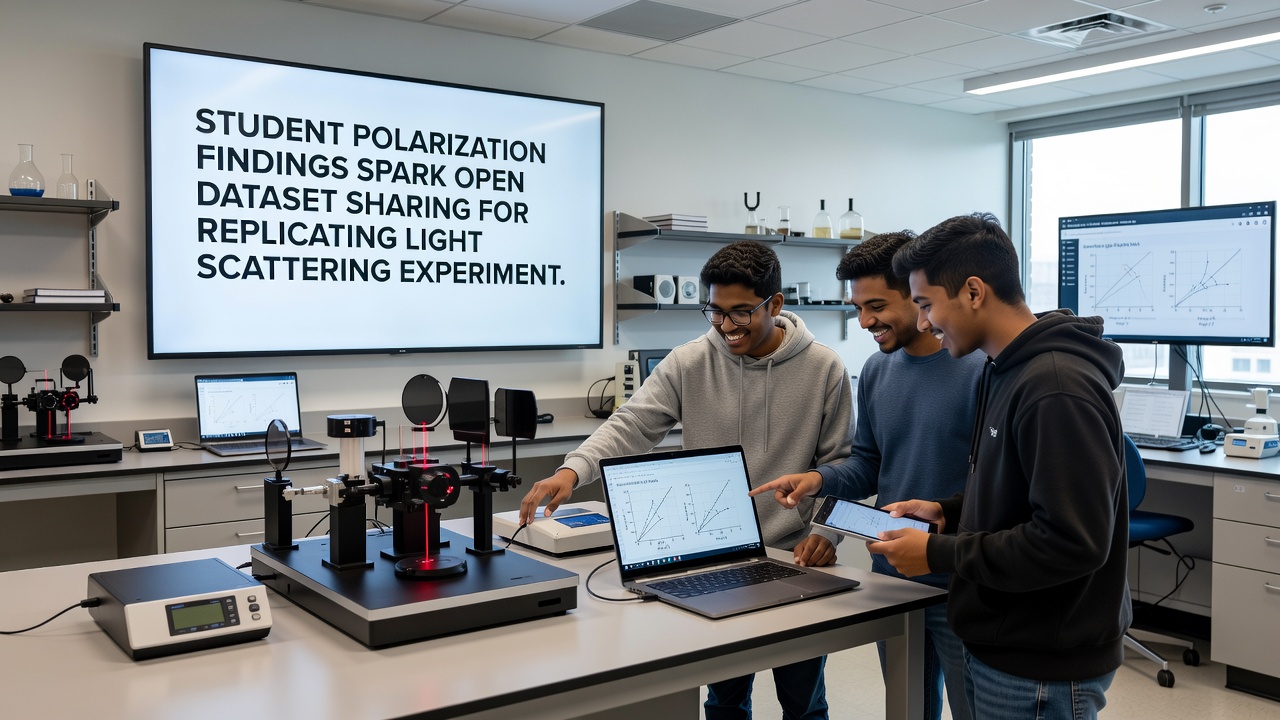
Teams seeking to replicate the experiments begin by assembling a goniometer-based scattering apparatus equipped with polarizing filters and calibrated photodetectors, and they then prepare agricultural samples according to the documented protocols that specify particle sieving sizes and hydration levels. Observers note that successful replication requires careful control of incident light wavelength, typically centered around 532 nm and 635 nm, because polarization responses vary across the visible spectrum. Data shows that once measurements are collected, users can apply the provided normalization routines to compare their findings directly against the shared student records.
Developments Observed in September 2026
In September 2026 several agricultural research stations reported initial replication outcomes that matched the original polarization trends within stated uncertainty margins, and these confirmations prompted additional groups to download the datasets for localized studies on regional soil types. Reports from Canadian field sites indicated that polarization data helped quantify differences in clay versus sandy soil scattering behavior, while parallel work in Australian research facilities examined polarization changes linked to crop residue distribution after harvest. The coordinated release timing allowed multiple institutions to align their experimental calendars and share preliminary cross-validation results through joint technical notes.
Integration with Existing Agricultural Research Frameworks
The open datasets complement ongoing efforts documented by Agriculture and Agri-Food Canada on precision monitoring technologies, and they also align with measurement standards promoted by European agricultural research networks focused on particulate emissions. Researchers have begun incorporating polarization parameters into models that predict how light interacts with pesticide spray droplets, thereby supporting more accurate deposition estimates in variable wind conditions. Evidence suggests the shared records reduce the time required for new laboratories to establish baseline calibration curves because the student data already accounts for common instrument offsets and environmental influences.
Conclusion
The student-derived polarization findings and subsequent dataset release have established a shared foundation for replicating light scattering experiments within farming research contexts, and continued contributions from additional institutions are expected to expand the available measurement range. Those accessing the materials gain access to detailed protocols that cover both laboratory and field-adapted procedures, while the open nature of the records encourages verification across diverse geographic and climatic conditions. Future updates to the repository will incorporate new wavelength bands and sample types as participating groups complete their own replication cycles.