Theo Friedrich · 2 September 2026
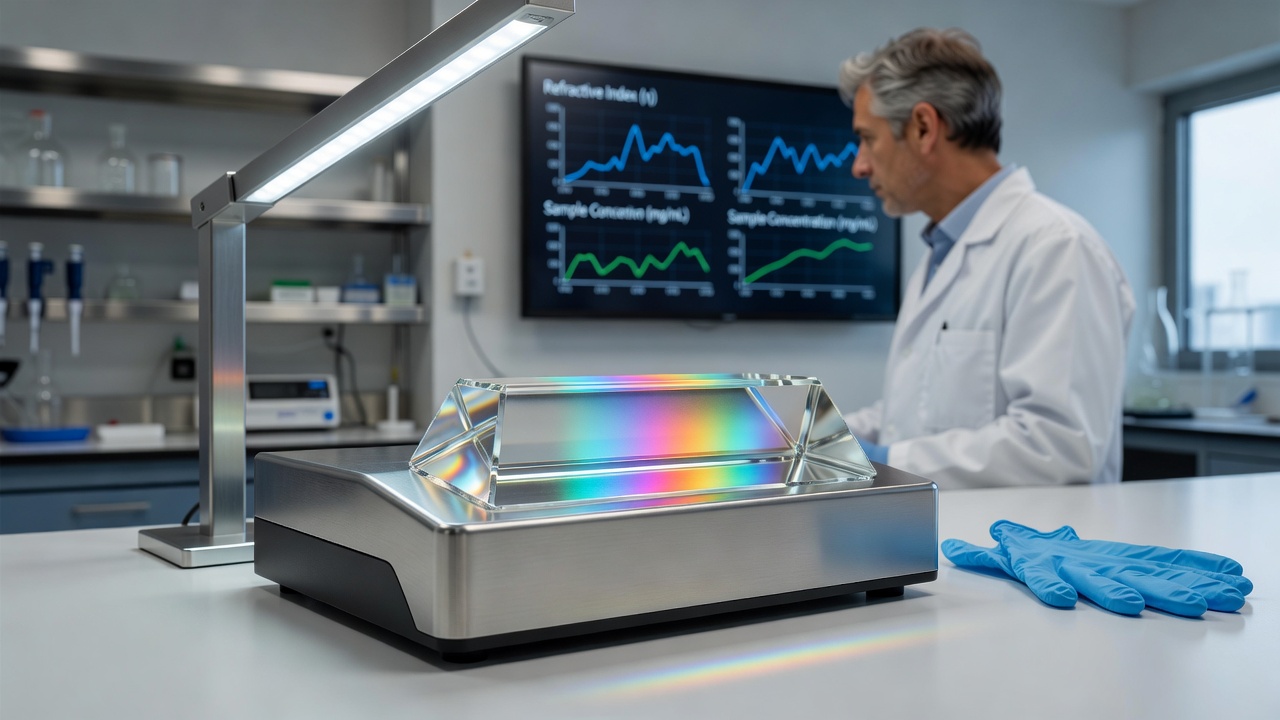
Prismlab Research Laboratory has announced the development of a novel refractive index sensor designed specifically for medical applications. This new device promises to enhance diagnostic capabilities by providing highly accurate measurements of refractive indices in biological samples. The sensor utilizes advanced optical technologies to detect minute changes in light refraction, which can indicate the presence of various medical conditions. Extensive laboratory tests confirm its stability and repeatability under controlled conditions.
Technical Specifications and Innovations
The sensor features a compact design that allows for integration into existing medical equipment. It operates with a precision of up to 0.0001 refractive index units, making it suitable for detecting low concentrations of biomarkers in blood and other fluids. Researchers at Prismlab have incorporated nanostructured materials to improve sensitivity and reduce noise in measurements. Testing has shown reliable performance across a range of temperatures and pH levels typical in clinical settings. The device is also designed to be cost-effective, potentially lowering the barriers to advanced diagnostic tools in healthcare facilities worldwide. Calibration protocols ensure consistent results across multiple units, while the modular architecture supports future upgrades without full replacement.
Applications and Future Prospects
In medical use, this refractive index sensor could revolutionize the detection of diseases such as diabetes, cancer, and infectious diseases by identifying specific molecular signatures through changes in refractive index. Early trials have demonstrated its effectiveness in monitoring glucose levels without invasive procedures. Prismlab plans to collaborate with hospitals for further validation studies. The laboratory emphasizes the sensor's role in personalized medicine, where real-time data can guide treatment decisions. With ongoing research, the technology may expand to environmental monitoring and food safety, but its primary focus remains on improving patient outcomes in clinical environments. Additional features include wireless connectivity for data transmission to electronic health records, ensuring seamless integration into modern healthcare systems. Scientists involved in the project highlight the interdisciplinary approach combining physics, biology, and engineering that led to this breakthrough. Future iterations aim to enhance portability for point-of-care testing in remote locations.