Eden Long · 20 October 2026
Polarization Insights from Student Projects Bridge Agricultural Prism Tools with Atmospheric Research Advances
Student teams at several universities have produced detailed polarization measurements that connect prism-based tools used in crop monitoring with techniques long established in atmospheric science and the projects reached a notable stage of data integration in October 2026 when preliminary results were shared across open repositories. These efforts focus on how light polarization changes as it passes through plant canopies and atmospheric layers and the findings allow researchers to refine both agricultural sensors and climate observation models without requiring entirely new hardware platforms.
Student Contributions to Polarization Data Collection
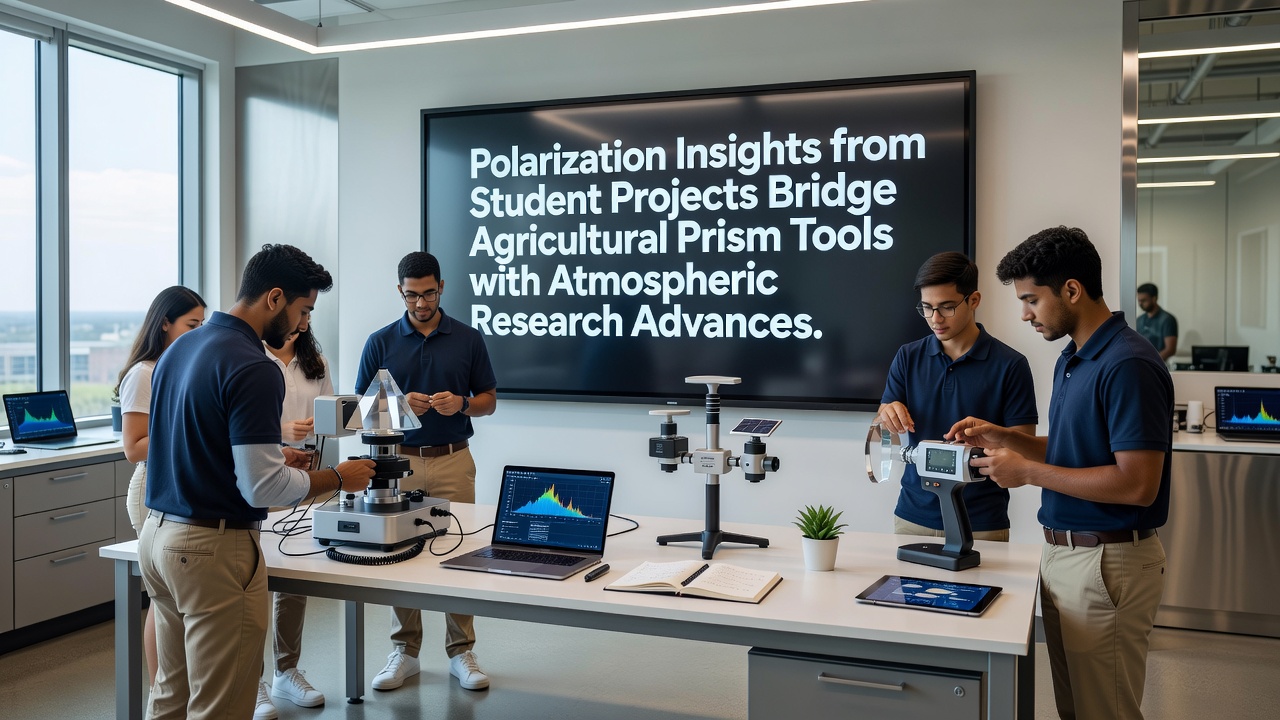
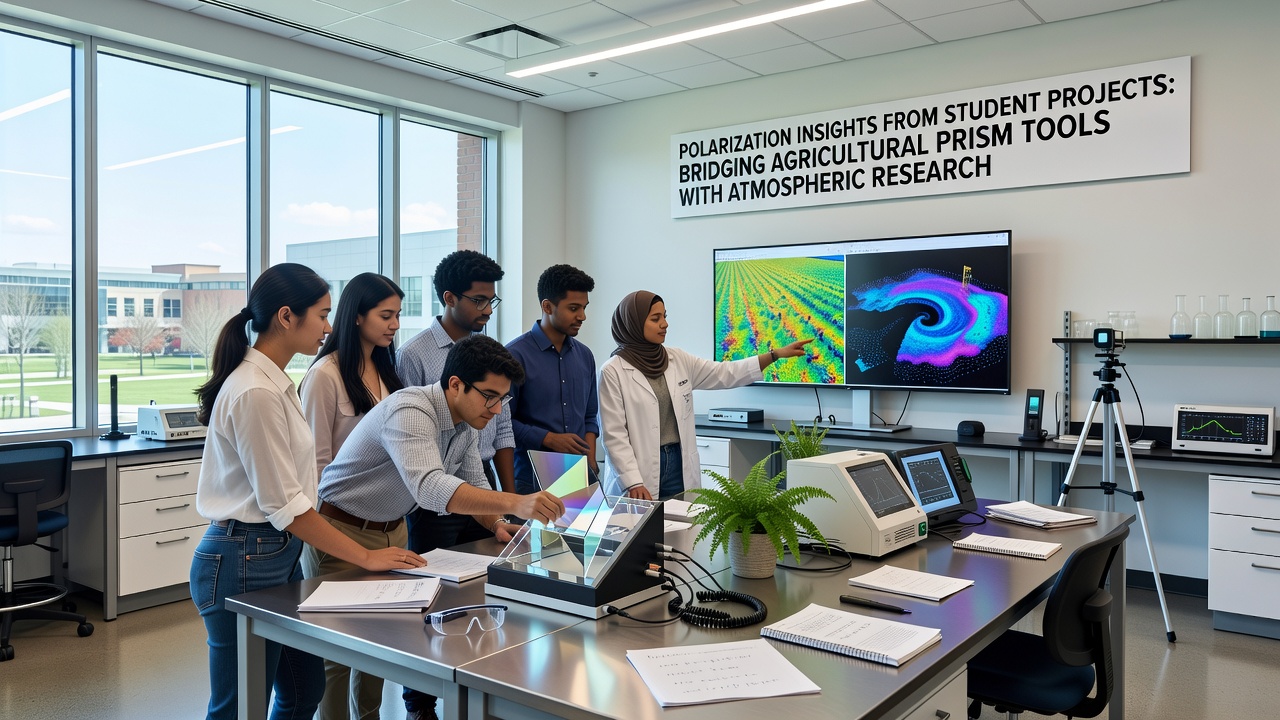
Undergraduate and graduate groups worked with modified prism assemblies to record polarization states in controlled greenhouse environments and open-field trials and they documented shifts in the degree of linear polarization that correspond to leaf angle distributions and moisture levels. Data sets generated during these trials include measurements taken at multiple wavelengths and incidence angles and the collections now serve as reference material for teams studying light scattering in both vegetation and aerosol layers. Observers note that the student protocols emphasize repeatability which supports later cross-validation with satellite-derived polarization products.
Linking Prism Tools in Agriculture to Atmospheric Techniques
Prism instruments originally developed for soil and canopy analysis share optical principles with polarimeters deployed on aircraft and ground stations for atmospheric profiling and student projects have mapped these commonalities by applying the same Mueller matrix formalism to both domains. The approach reveals how birefringence effects in plant tissues parallel scattering signatures from ice crystals or dust particles and this overlap permits transfer of calibration routines between the two fields. Researchers have shown that a single set of polarization reference standards can improve accuracy for crop stress detection and simultaneously reduce uncertainty in aerosol optical depth retrievals.
Key Measurements and Shared Methodologies
Experiments conducted across multiple sites recorded polarization ratios at 450 nm, 550 nm, and 650 nm under varying solar zenith angles and the resulting curves demonstrate consistent patterns that align with radiative transfer simulations used in atmospheric research. Teams applied identical data reduction steps to agricultural and atmospheric samples which eliminated discrepancies that previously arose from separate processing pipelines. Figures reveal that polarization preservation through leaf layers follows similar decay rates to those observed in thin cirrus clouds and this quantitative match opens pathways for joint inversion algorithms.
Dataset Sharing and Replication Pathways
Open repositories now host raw polarization traces along with metadata describing instrument orientation, ambient conditions, and calibration histories and access records indicate downloads by groups working on both agricultural remote sensing and climate modeling. The shared format uses standardized Stokes parameter files which simplifies integration into existing analysis frameworks at institutions in North America, Europe, and Asia. Those who have tested the data report successful replication of primary scattering features within stated uncertainty bounds and this consistency supports broader adoption of the student-generated collections.
Implications for Future Instrument Design
Designers of next-generation agricultural sensors have incorporated polarization channels calibrated against atmospheric standards and the resulting prototypes exhibit improved discrimination between healthy and stressed vegetation under hazy conditions. Conversely atmospheric monitoring programs have begun testing compact prism modules originally engineered for field deployment in farming regions and early trials indicate comparable performance to larger benchtop systems. Coordination between these communities continues through joint workshops scheduled for late 2026 and early 2027.
Conclusion
Student projects have supplied measurable polarization data that directly connects prism-based agricultural tools with established atmospheric research methods and the resulting datasets and methodologies support ongoing refinement of both application areas. Continued exchange of calibration practices and open data resources positions these efforts to contribute to integrated observation systems that serve agricultural monitoring and climate studies alike.