Theo Friedrich · 3 November 2026
Funding Initiatives Driving Innovations in Eco-Friendly Materials for Optical Research in Poland
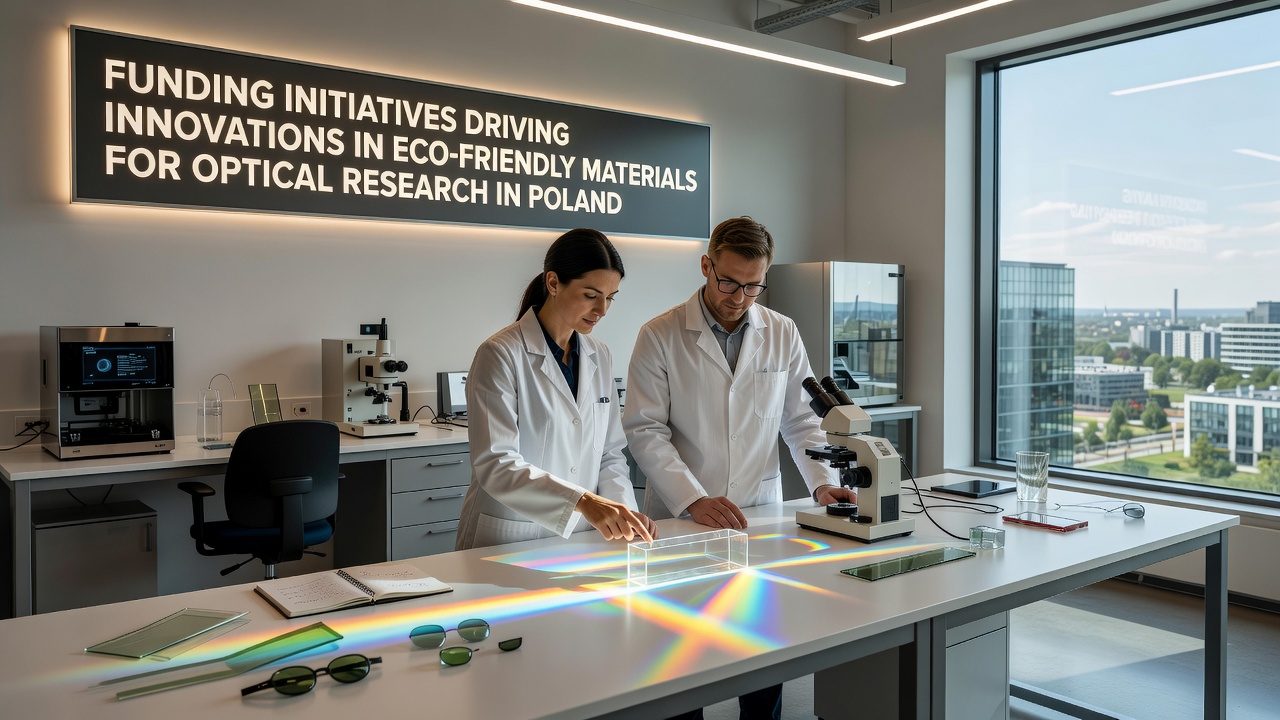
Poland has positioned itself as a growing contributor to sustainable optical technologies through targeted funding programs that support the development of eco-friendly materials. These initiatives channel resources from national agencies and European Union frameworks into projects focused on biodegradable substrates, low-impact coatings, and recyclable photonic components. Data from the National Centre for Research and Development shows that allocations for green optics increased steadily between 2023 and 2025, with further rounds expected to open in November 2026.
National Funding Mechanisms Supporting Green Optics
The National Science Centre operates several grant streams that explicitly prioritize environmental criteria in optical research proposals. Researchers submit projects that replace conventional glass or plastic elements with materials derived from renewable sources while maintaining precise light-manipulation properties. One program requires applicants to demonstrate lifecycle assessments that quantify reductions in carbon emissions and waste generation compared with traditional manufacturing routes.
Meanwhile the National Centre for Research and Development runs collaborative calls that pair academic teams with industrial partners. These consortia have produced prototypes of optical sensors and filters built on cellulose-based films and plant-derived resins. Figures released by the agency indicate that more than thirty such projects received support in the past three budget cycles, resulting in patent filings and technology transfer agreements.
European Union Programs and Cross-Border Collaboration
Horizon Europe funding streams have complemented national efforts by providing larger-scale resources for multinational teams working on sustainable photonics. Polish institutions participate in clusters that investigate bio-compatible waveguides and self-healing optical adhesives. Project documentation shows emphasis on compliance with the European Green Deal targets, including measurable decreases in hazardous substance use throughout the supply chain.
Observers note that these combined funding sources create layered support structures. A single research group might receive seed money from a domestic agency, then scale the work through an EU consortium once preliminary data demonstrates feasibility. This progression appears in several ongoing efforts aimed at optical components for medical imaging and environmental monitoring.
Material Innovations Emerging from Supported Projects
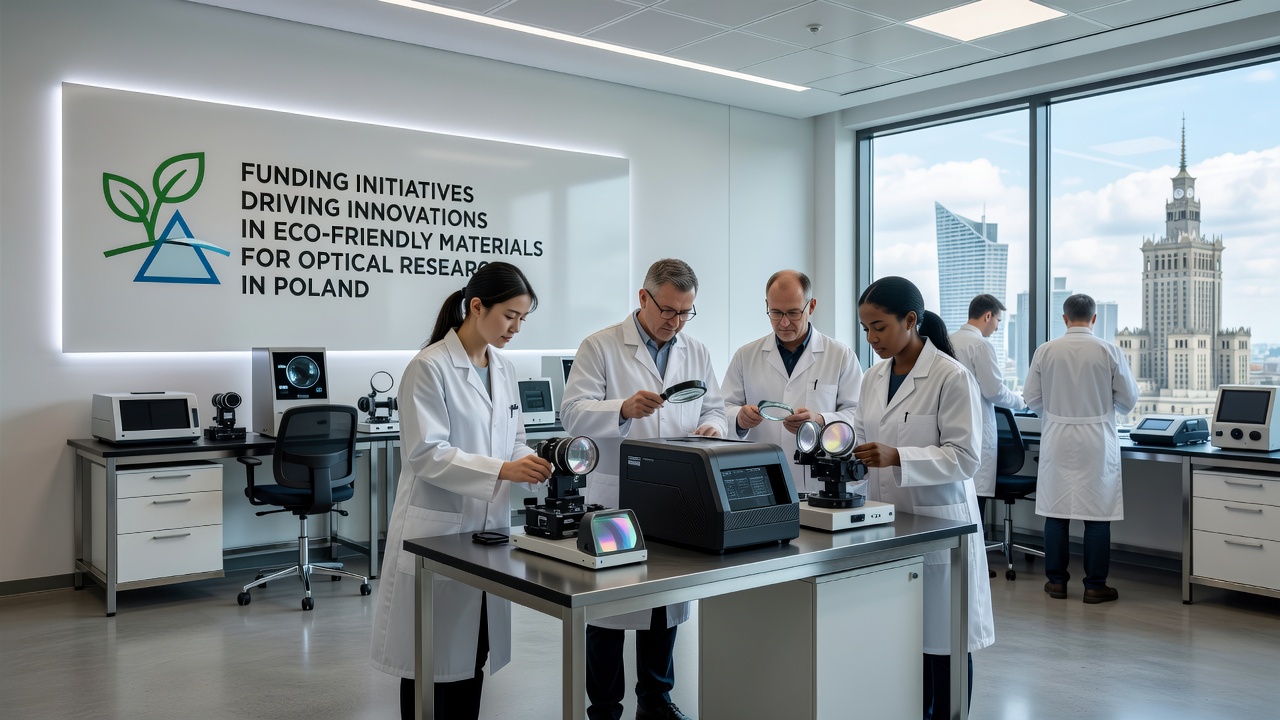
Funded teams have reported advances in polymers synthesized from agricultural by-products that exhibit refractive indices suitable for lens and prism fabrication. Laboratory tests confirm these materials withstand standard optical polishing processes while degrading under industrial composting conditions within defined timeframes. Additional work focuses on thin-film coatings derived from silica extracted from rice husks, offering an alternative to mined quartz sources.
Case examples include a consortium that developed a biodegradable diffraction grating for spectroscopic instruments. The grating maintained performance specifications across temperature and humidity ranges typical of field deployments, according to published validation data. Another group produced recyclable fiber-optic preforms using polylactic acid blends, reducing reliance on petroleum-based polymers traditionally employed in telecommunications infrastructure.
November 2026 Outlook and Upcoming Opportunities
Planning documents indicate that new funding calls scheduled for November 2026 will expand eligibility to include small and medium enterprises specializing in green chemistry. These calls are expected to place greater weight on circular-economy metrics such as material recovery rates after product end-of-life. Research institutions are preparing proposals that integrate optical performance testing with standardized environmental impact evaluations.
Coordination between Polish agencies and European partners continues to emphasize open-access publication of material characterization data. This practice supports replication studies and accelerates adoption of verified eco-friendly alternatives across the optics sector. Records from recent grant cycles show that shared datasets have already informed follow-on projects in neighboring countries.
Conclusion
Funding initiatives in Poland have established clear pathways for advancing eco-friendly materials within optical research. National programs supply targeted domestic support while European frameworks enable larger collaborative efforts. The resulting projects generate tangible outputs in the form of new materials, validated prototypes, and measurable environmental improvements. As the November 2026 funding rounds approach, the infrastructure built over previous cycles positions Polish research teams to sustain momentum in sustainable photonics development.